
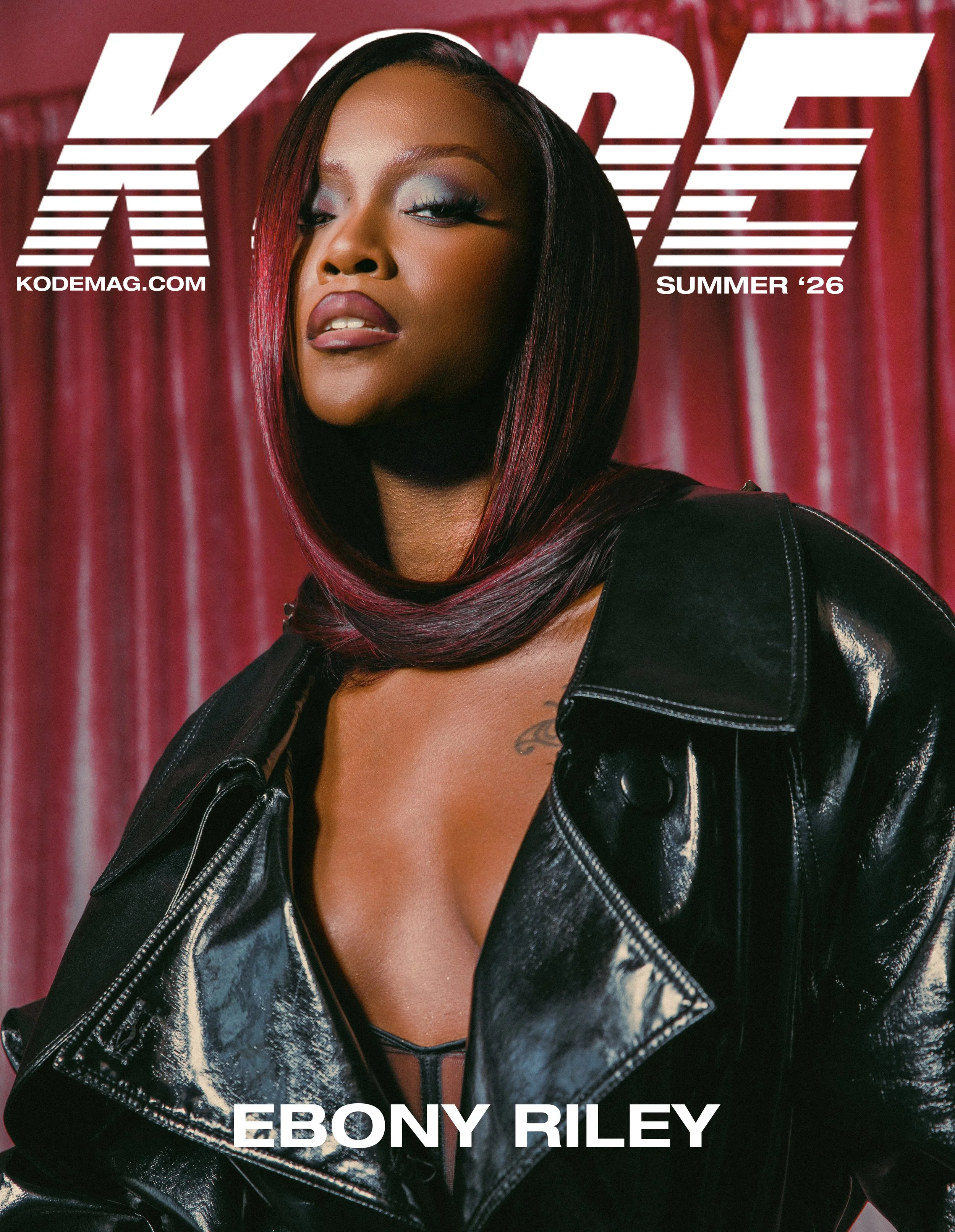
COVER EXCLUSIVE: EBONY RILEY
There's a version of this story that starts on a runway. Ebony Riley walked them all — Marc Jacobs, Oscar de la Renta, Balmain, Givenchy — under a name that wasn't hers. An agent told her early on that the industry didn't need another Black girl named Ebony. She listened, for a while.
Beautiful Tragedy, her debut album, is what happens when she stops listening.
Released in April on Interscope, the thirteen-track record is dedicated to the mother she lost at nine. It was written in the wake of a breakup and shaped by the deaths of her father and grandmother in the same stretch of time. "Honest," one of its most quietly devastating moments, was recorded the day after her father passed. Executive produced with Larrance "Rance" Dopson and featuring work from Rodney "Darkchild" Jerkins, James Fauntleroy, Tommy Brown, Harmony Samuels, and Shea Taylor, it's a debut with the emotional architecture of a fifth album — the sound of a Detroit-raised singer who spent a decade being other people's vision, and finally decided to build her own.
For our Summer Issue, Ebony sat down to talk craft. Not the runway, not the pivot, not the origin story — the music itself. The producers who shaped it. The Whitneys and Aaliyahs she studied. What her voice does in a booth the day after a funeral. What it means to hold a song like "Bloom," written for young Black girls, on the same tracklist as songs about grown love. The contradictions she refuses to reconcile.
The full conversation, and the shoot, below.

COVER EXCLUSIVE:
From runways as Riley Montana to R&B under her birth name, Ebony Riley steps into her Summer Cover moment with Beautiful Tragedy — a debut album about grief, growth, and choosing herself.

